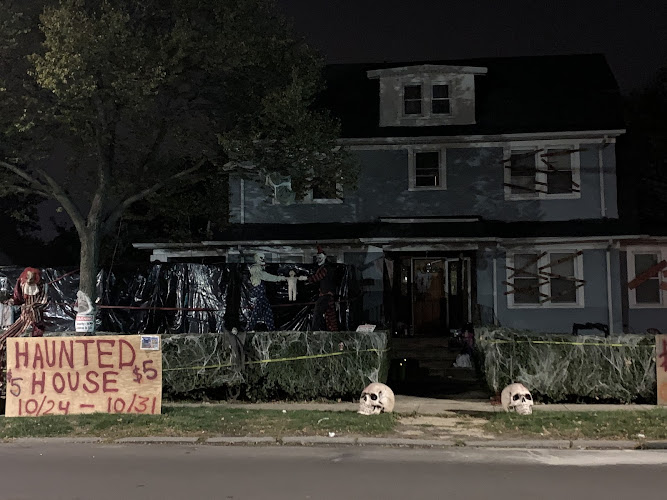
A Haunting in Hollis in Queens, New York, doesn’t ease you into anything. You’re dropped straight into an abandoned house where every corridor leads deeper into dread. The setting shifts between a decaying carnival, a grimy asylum, and a prison block, each zone meticulously dressed to amplify the sense of wrongness.
Actors move through the dark, not just to startle but to drive a narrative that feels personal. Their performances make the environment feel alive, as if the building itself remembers every scream that’s echoed through its halls.
This scenario asks you to navigate pitch-black mazes where your only source of light is a single dim flashlight shared among your group. You rely on touch, hearing, and the person next to you to find the way out. The actors interact directly, sometimes guiding you toward a door, sometimes standing motionless in the dark until you stumble past them.
For those who want to push the tension further, optional laser guns let you take on zombies lurking in the shadows, adding a layer of active resistance to the horror. The puzzles blend into the fear, forcing you to think under pressure while half expecting a hand to grab your shoulder.
The mission is built for small groups or couples looking to share a concentrated dose of terror. Each step forces a negotiation between courage and panic. The actors never break character, and the darkness makes every creak a potential threat. Signing a waiver before entry signals that this is no mild haunt, it’s a full descent into a narrative designed to strip away comfort.
Whether you’re a seasoned horror fan or someone wanting to test your limits in a controlled environment, the tension escalates with your group’s pace but never lets up entirely.
What distinguishes A Haunting In Hollis is its commitment to authenticity. Two 40-foot mazes run pitch black, eliminating sight and forcing your group to communicate through touch and whispered cues. The carnival room hums with distorted music, and the asylum corridors smell of antiseptic and age.
Prison cells rattle with unseen movement, and the floorboards creak under deliberate weight. Every detail, from the air pressure to the timing of the scares, works to keep you off balance. This isn’t about quiet deduction; it’s about instinct, teamwork, and the raw sensation of being hunted in a space that feels abandoned but alive.